

Every growing business faces the same invisible problem.
Someone on your team is managing payments manually. Sending reminders. Tracking installments. Reconciling what came through versus what’s outstanding. Following up when things are late. Updating spreadsheets. Managing exceptions.
This work is necessary. But it’s also invisible, buried in someone’s job description, scattered across their calendar, treated as “just part of operations.”
Until one day you do the math.
ALSO READ: The Customer Who Already Chose You: Why Intentional Shoppers Are Worth Building a Business Around
The Hidden Cost
If someone on your team spends time each week managing payment collections, you have in fact hired an invisible employee. This employee is not on payroll, but functionally, they exist to manage a process that should be automated.
The cost of this adds up. Multiply even a few hours per week by someone’s salary and you’re looking at a substantial annual spend on payment administration alone.
But that’s not the real number.
The real cost includes:
- What could that person accomplish if they weren’t managing payments?
- Every payment issue pulls their attention from their actual role, making them less effective
- Late payments create working capital issues that cost you flexibility
- Manual processes have higher failure rates. Spreadsheets get out of sync. Payment terms vary by customer.
- Nobody feels successful chasing people for money
When you add these up, you’re effectively seeing that it is costing your business quite a bit.
And that’s before you consider growth. As your business scales, this cost can compound. More customers means more payment tracking. More payment tracking means hiring additional people to manage it.

Why This Persists
The reason manual payment collection persists isn’t laziness or ignorance. It’s that we’ve normalized it.
“That’s just how payments work,” we say. We accept it because everyone does it. We tolerate it because the cost is invisible. We assume there’s no alternative because we’ve never seriously looked for one.
The business world has automated almost everything else. Sales has CRMs. Support has ticketing systems. Accounting has automation platforms. But payments? Payments are still stuck in email and spreadsheets, managed by human beings who have better things to do.
ALSO READ: Overstretched and Underpaid: How Financial Pressure Is Reshaping How South Africans Pay
What Actually Changes
When you automate payment collection:
Your team gets their time back. They stop being collectors and become operators. They focus on customer success, strategy, and scaling the work that actually moves your business forward.
Your customers get clarity. Flexible payment options become a straightforward feature, not an awkward negotiation. They see when they’ll pay. They manage the schedule. The friction disappears.
Your cash flow becomes predictable. You know exactly what’s due, what’s been received, and what’s coming. Your CRM knows which customers are on track. Your ERP has accurate forecasting. No spreadsheets. No surprises.
The Move
This August, LayUp launched Payment Plans, a purpose-built solution for automating flexible payment options without creating operational overhead.
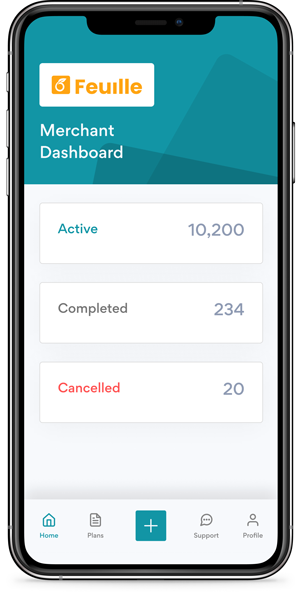
With Payment Plans, you offer flexible payment options that customers actually want, automate the entire collection process, integrate with your CRM and ERP so your team always knows where things stand, and get real-time visibility into payment status through a clean dashboard.
No spreadsheets. No awkward follow-ups. No invisible employees. Just systems that work.
The most expensive employee in your business might be the one managing your invoices. The question is: do you want to keep paying for them?
Learn more: https://layup.co.za/business/merchant-payment-plan

LayUp is South Africa’s leading Save Now, Buy Later platform, helping merchants across 2,000+ brands convert high-intent shoppers into completed, credit-free sales. Learn more at layup.co.za