








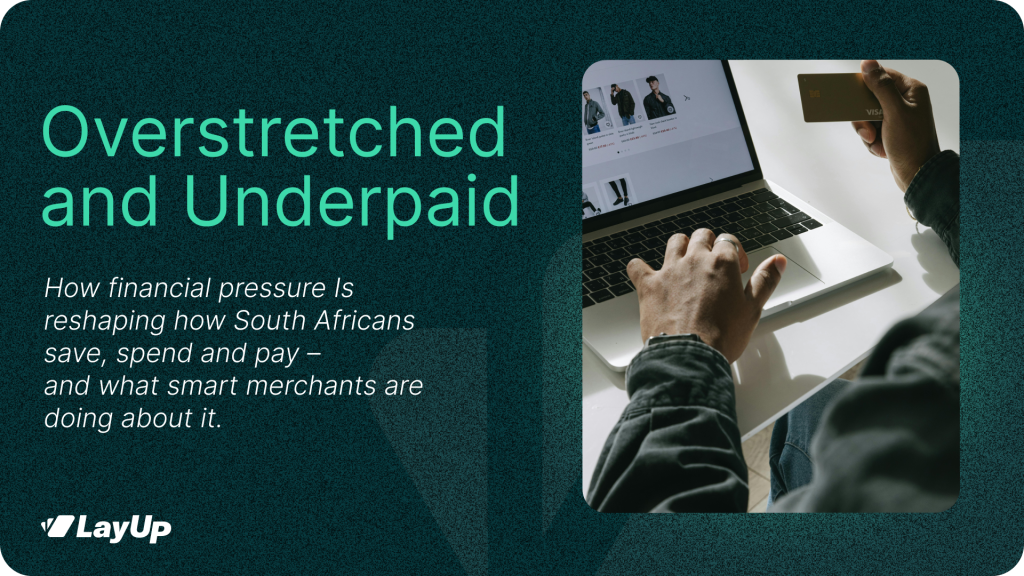
And What Smart Merchants Are Doing About It
Most South Africans aren’t making financial decisions from a place of comfort. They’re making them from a place of pressure.
Nearly half of working professionals feel their salaries don’t reflect the cost of living. Average earnings may be reaching record highs on paper, but the reality on the ground is different: 21% of South Africans have R1,000 or less left by payday. Costs are climbing, salaries aren’t keeping pace, and the gap between what people earn and what life actually costs is widening – quietly, consistently, and with real consequences for how people spend.
In this context, the 2025 Stitch Consumer Payments Report isn’t just a fintech industry document. It’s a window into how South African consumers are navigating money, trust, and everyday life right now. And for merchants who understand what the data is really saying, it’s a strategic signal worth paying attention to.
- 21% of South Africans have R1,000 or less left by payday
- ~50% of working professionals feel their salary doesn’t reflect their work
- 90%+ of South Africans surveyed have tried a new payment method in the last year
The Shift Is Real – and It’s Being Driven by Necessity
According to the Stitch report, more than 90% of South Africans surveyed have tried a new payment method other than cash or cards in the last year alone. Pay by bank, Capitec Pay, PayShap, digital wallets – these aren’t niche. They’re becoming the default for a generation of consumers who expect their money to move as fast as their lives do.
What’s driving adoption isn’t just the appeal of new technology. It’s trust, and it’s a necessity. South Africans are making financial decisions amid rising living costs, tightening budgets, and heightened anxiety about security. When a payment method feels safe, simple, and instant, it wins. When it doesn’t, consumers walk.
The data makes this clear: customers on major retail platforms switched to Apple Pay almost immediately upon its local launch. Buy Now Pay Later (BNPL) is quietly gaining ground for higher-value purchases, giving people a way to manage spend across a pay cycle – but not without tension. Because for many South African consumers, “buy now, pay later” carries real risk. It’s credit. It accumulates. And in a household already stretched thin, it can tip the balance the wrong way.
The question merchants need to be asking isn’t just ‘how do our customers want to pay?’ It’s ‘what kind of financial relationship do we want to have with them?’
This Is Where LayUp Fits – Not as a Payment Trend, but as a Financial Reality
LayUp Technologies isn’t a response to a fintech opportunity. It’s a response to a lived reality that millions of South African households know well: wanting something, being unable to pay for it all at once, and not wanting to go into debt to get it.
The Save Now, Buy Later (SNBL) model – the model LayUp is built on – works because it doesn’t add to the pressure. It redistributes it. Customers commit to a purchase, set aside what they can afford in structured instalments, and receive the item once it’s paid off – no interest, no credit check, no debt.
For merchants, this isn’t just an alternative checkout option. It’s a different kind of customer relationship – one built on financial empathy rather than financial dependency.
When a customer puts something on a LayUp plan, they’re signalling intent. They want the item. They’re willing to save for it. And when they pick it up, that purchase is settled – not the start of a payment obligation. That’s a fundamentally different dynamic to BNPL, and it matters in a market where consumers are increasingly wary of anything that looks like debt in disguise.
ALSO READ: SNBL Explained: What Is Save Now, Buy Later – and Why It’s Replacing Debt
What Financially Pressured Consumers Actually Need From Merchants
The Stitch data reveals something important about where consumer trust is going: people aren’t just choosing payment methods based on convenience. They’re choosing based on how safe, in control, and financially respected they feel.
For merchants, this is a meaningful signal. Stocking a product and offering a payment option isn’t enough anymore. The merchants that are building loyalty in this environment are the ones that understand their customers are making difficult trade-offs every month – and who offer tools that make those trade-offs easier, not harder.
ALSO READ: LayUp for Merchants: Powering Growth with Loyalty and Trust
LayUp gives merchants three things that matter right now:
- A way to capture purchase intent before customers have the full amount.
- A checkout option that feels responsible and debt-free – important in a market with growing consumer anxiety around credit.
- A tool for moving higher-ticket items that might otherwise sit.
Customers who couldn’t afford something in one go can now plan for it – and still buy it from you, not a competitor. A brand alignment that resonates.
Offering LayUp tells your customers you understand their reality. That’s not a small thing when trust and financial security are the top drivers of payment method choice.
The Bottom Line for Merchants
South African consumers are not pulling back from spending. They’re rethinking how they manage it. They’re choosing options that feel in control, that don’t carry hidden costs, and that respect their financial position rather than exploiting it.
The merchants who thrive in this environment won’t just be the ones with the best products. They’ll be the ones with the most financially empathetic offer – the ones who make it easier, not harder, to access what their customers want.
LayUp is how you meet your customer where they are – not where the economy wishes they were.
Want to offer LayUp to your customers?
LayUp integrates with your existing store setup – online and in-store. No credit infrastructure, no complexity. Just a smarter, more responsible way to help your customers buy.
Speak to us at layup.co.za/business.
Data references: 2025 Stitch Consumer Payments Report. Additional statistics from public South African labour and consumer research. This content forms part of LayUp’s ongoing B2B thought leadership series.